If you’re dealing with mould spreading from a neighbour’s flat in the UK and are considering professional mould remedaition, understanding your rights and the correct steps is crucial. Responsibility typically lies with the neighbour’s landlord (if they are a tenant) or the freeholder/neighbour themselves (if a leaseholder, depending on the cause).
Under UK housing law, severe mould can be considered a statutory nuisance, protecting your rights via acts like the Environmental Protection Act 1990 and the Housing Act 2004. Your first steps should be to document all damage with photos and records, then notify the responsible party in writing. If the issue is disputed, consider arranging a professional damp investigation. If problems persist or are ignored, involve your local council’s Environmental Health team. Seeking legal advice is an option for persistent issues, allowing you to demand appropriate action and potential compensation.
Skip to:
Mould from a neighbours property
What causes mould to spread between properties?
Step-by-step guide on what to do
Mould from a neighbours property
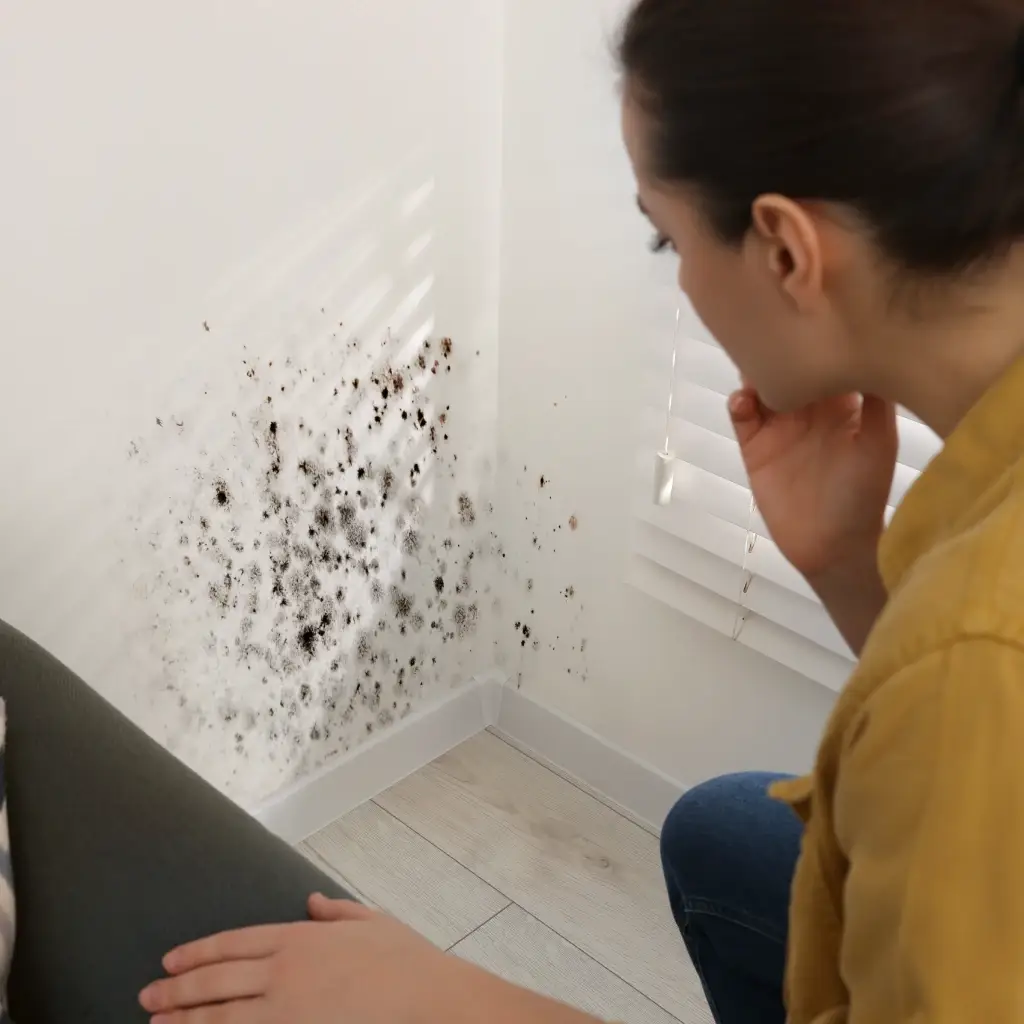
Finding mould in your flat is bad enough but when it’s coming from your neighbour’s property, things get even more complicated. Whether you’re a leaseholder, tenant, or homeowner, mould spreading from an adjacent flat can cause health issues, structural damage, and legal disputes.
This guide explains your rights under UK law and outlines the practical steps to stop the mould and hold the right party accountable.
What causes mould to spread between flats?
In UK housing, especially older buildings or poorly insulated conversions, moisture often travels between party walls, floors, or ceilings.
Common causes of cross-property damp and mould include:
- Leaking pipes or appliances in the neighbouring flat
- Condensation caused by poor ventilation
- Penetrating damp from shared roofs or external walls
- Structural issues like cracked render or blocked gutters
Mould thrives in humid, poorly ventilated environments, so a problem in one flat can easily migrate next door. Without addressing the root cause of the mould issue, it is unfortunately likely to keep returning. Identifying and solving the underlying damp issue that has migrated between the flats is the key a to long-term mould free home.
Is my neighbour responsible?
That depends on who owns what, and what caused the problem.
If your neighbour is a tenant:
- The landlord (not the tenant) is usually responsible for repairs under the Landlord and Tenant Act 1985.
- If their landlord fails to act, you may need to involve your own landlord, management company, or local council.
If your neighbour is a leaseholder:
- Responsibility may lie with the freeholder, especially if the issue originates from shared walls, roofs, or drains.
- If the problem stems from neglect (e.g. not reporting a leak), the neighbour could be directly liable.
What Are Your Legal Rights?
Under UK housing law, mould that affects health and safety is considered a statutory nuisance.
You have legal rights under:
- The Environmental Protection Act 1990
- The Housing Health and Safety Rating System (HHSRS) under the Housing Act 2004
- The Defective Premises Act 1972 (for injury or health issues)
These give you the right to:
- Demand action from the responsible party
- Report the issue to your local council’s environmental health team
- Seek compensation for health impacts or property damage in severe cases
Step-by-step: What to do
Follow these steps to document and address the mould issue:
1. Document damage
Take dated photos of:
- Visible mould and damp patches
- Condensation or water ingress
- Any health impacts (e.g. asthma, skin reactions)
Keep records of communication with neighbours, landlords, or managing agents.
2. Notify the responsible party
Start by writing to:
- Your neighbour (if appropriate)
- Their landlord or letting agent
- Your property management company or freeholder (if applicable)
Use clear, factual language and request a professional inspection.
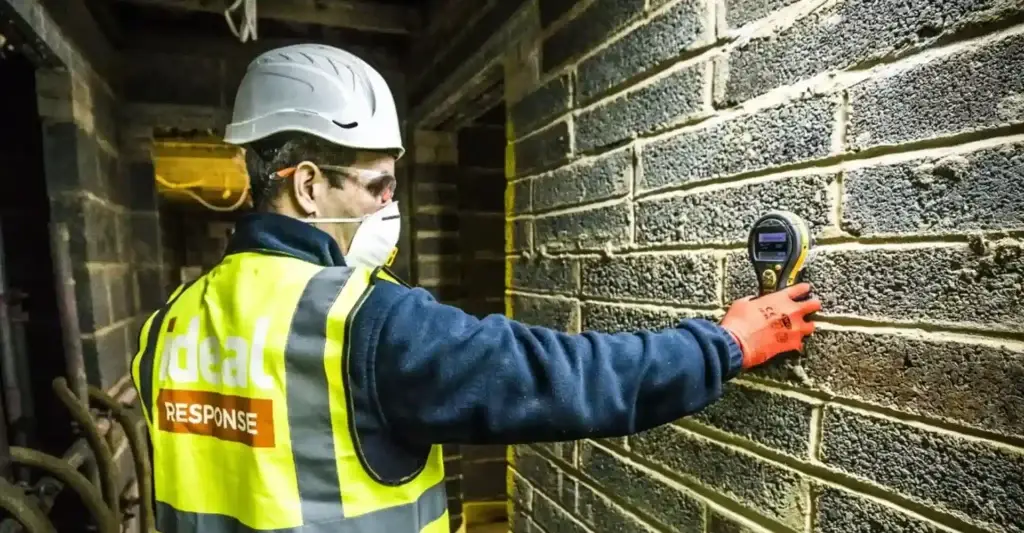
3. Request a damp investigation
If responsibility is disputed, arrange a damp survey from a certified company.
The report may determine:
- Source of moisture
- Required repairs
- Whether legal intervention is needed
We offer expert damp surveys, call now to book yours.
4. Involve the local council
If the mould is severe or ignored, your council’s Environmental Health team can:
- Inspect the property under HHSRS
- Issue enforcement notices
Penalise negligent landlords or owners
5. Seek legal advice
If damage or health issues persist, you may need to:
- Use a housing solicitor
- Claim via small claims court or through landlord insurance
How to prevent further mould spread
While waiting for repairs or action, you can take steps to minimise risk in your own flat:
Short-term protection
- Use a dehumidifier to lower humidity
- Keep windows open where possible (ventilation)
- Avoid drying clothes indoors without extractor fans
Professional solutions
- Anti-mould treatment for walls and ceilings
- Air quality testing and purification
- Damp-proofing or insulation upgrades
Health risks of long-term exposure
Prolonged exposure to mould, especially black mould (Stachybotrys chartarum), can cause:
- Respiratory problems (asthma, wheezing)
- Allergic reactions and skin irritation
- Headaches, fatigue, and sinus infections
This is particularly dangerous for:
- Children and babies
- People with respiratory conditions
- The elderly
To learn more about the health risks of mould you can visit our UK homeowners guide to mould which gives an in-depth breakdown of the health risks. You can also visit our Urgent Black Mould Removal for a HMO case study to see how professional mould remediation is handled for multi-tenant properties.
Conclusion
Mould caused by a neighbour’s flat is not just frustrating, it’s a genuine legal and health issue. But as a UK property resident, you have clear rights and a legal framework to support you. By documenting damage, contacting the correct parties, and seeking professional help, you can resolve the issue and restore a healthy living environment.
Need help tracing and removing mould at its source? Contact us today for expert mould removal and damp surveys.
Need to speak to a specialist urgently? Call 0800 088 4170
Mould from a neighbours flat: Frequently asked questions
Who is responsible for mould coming from a neighbour's flat in the UK?
Responsibility for mould from a neighbour’s flat in the UK depends on the neighbour’s status and the cause. If the neighbour is a tenant, their landlord is usually responsible under the Landlord and Tenant Act 1985. If the neighbour is a leaseholder, responsibility might fall to the freeholder for structural issues or the neighbour directly if their neglect caused the problem.
What are my legal rights regarding mould spreading from a neighbouring property in the UK?
Under UK housing law, mould affecting health and safety can be a statutory nuisance. Your rights are protected by the Environmental Protection Act 1990, the Housing Health and Safety Rating System (HHSRS) under the Housing Act 2004, and the Defective Premises Act 1972. These laws allow you to demand action, report the issue to your local council, and potentially seek compensation.
What steps should I take if I discover mould from a neighbouring flat?
First, document all damage with dated photos and keep records of communications. Then, notify the responsible party (neighbour, their landlord/agent, or property management) in writing. If unresolved, consider arranging a professional damp investigation to determine the source, and if necessary, involve your local council’s Environmental Health team.
When should I involve my local council's Environmental Health for neighbour-related mould?
You should involve your local council’s Environmental Health team if the mould is severe, negatively impacting your health, or if the responsible party (neighbour, landlord, freeholder) ignores your notifications or fails to address the issue adequately. The council can inspect the property and issue enforcement notices.
Can I claim compensation for health issues or property damage caused by a neighbour's mould?
Yes, in severe cases where mould from a neighbour’s flat has caused health issues or property damage, you may have grounds to seek compensation. This typically involves documenting all impacts, following the outlined steps for resolution, and potentially consulting a housing solicitor or pursuing a claim via small claims court.
What are the common causes of mould spreading between flats?
Mould commonly spreads between flats due to leaking pipes or appliances from an adjacent property, condensation exacerbated by poor ventilation in the neighbour’s unit, penetrating damp from shared external walls or roofs, and underlying structural issues that allow moisture transfer.

Tahlia Ibrahim - Delivery Manager
Tahlia has over four and a half years of in-depth experience across various facets of the disaster recovery industry. Having progressed through roles in marketing and sales to her current position, Tahlia possesses a comprehensive understanding of the entire business operation, from initial client contact to meticulous service delivery. A certified BioSweep Specialist, she excels in advanced odour elimination techniques, ensuring thorough restoration.