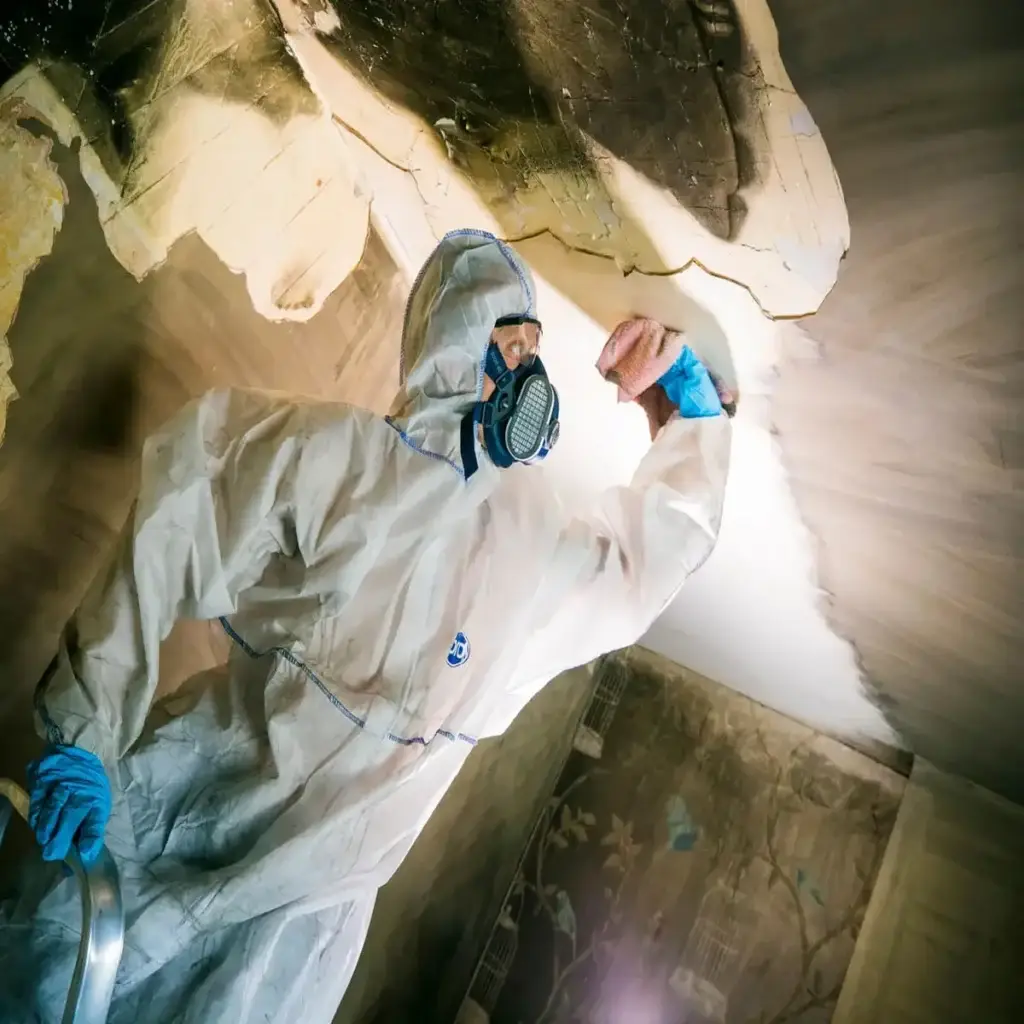
When mould needs more than a wipe-down
We’ve all seen it, a small patch of mould creeping along a wall or ceiling. A quick scrub and a spray of bleach might make it disappear, but a few weeks later, it’s back.
At Ideal Response, we see this every week across homes and businesses in the UK. The problem isn’t the cleaning product, it’s the approach. Mould isn’t just on the surface; it’s a living organism that spreads invisibly through spores.
That’s where professional mould remediation comes in. It’s not a quick clean; it’s a structured, scientific process that identifies the source, removes contamination safely, and prevents regrowth.
Skip to:
The UK’s growing mould problem
What professional mould remediation actually means
Mould removal vs mould remediation: What’s the difference?
Why experience makes the difference
The risks of DIY mould cleaning
The health impact of mould exposure
When to call the professionals
The UK’s growing mould problem
In the UK, mould and damp are now recognised as major public health issues, not just property concerns. According to the National Housing Federation, around 1 – 2% of social homes suffer from serious damp and mould problems, while another 3 – 4% have notable issues. That’s more than 200,000 homes nationwide affected by mould-related hazards every year.
These problems have become so widespread that they’ve led to new legislation: Awaab’s Law, designed to protect residents from unsafe living conditions caused by damp and mould.
What is Awaab’s Law?
In 2020, two-year-old Awaab Ishak tragically died due to prolonged exposure to mould in his family’s flat in Rochdale. His death prompted a national outcry and the introduction of Awaab’s Law, part of the Social Housing (Regulation) Act 2023.
From October 2025, social landlords across England will be legally required to:
- Investigate any reports of damp or mould within 10 working days.
- Begin repairs or remediation within 5 working days if hazards are confirmed.
- Address any emergency hazards (including severe mould) within 24 hours.
By 2027, the law will expand to cover all major health hazards under the Housing Health and Safety Rating System (HHSRS).
Simply put, landlords can no longer delay action on mould; it’s now a legal duty, not just a maintenance issue.
For property owners and landlords, this shift means that professional mould remediation isn’t just best practice, it’s becoming a matter of legal compliance.
Learn more about Awaab’s Law in these two more detailed articles, ‘AWAAB’s Law: Understanding new social housing regulations‘ and ‘Awaab’s Law: What it means for tenants and landlords in the UK‘.
What professional mould remediation actually means
Professional mould remediation is a scientific and structured process, not a quick cleaning job. It involves:
- Inspection & testing: Identifying the mould type, extent, and root cause.
- Containment: Sealing off affected areas to prevent spore spread.
- Air filtration: Using HEPA systems to capture airborne mould particles.
- Removal & treatment: Cleaning, disinfecting, or replacing contaminated materials.
- Drying & verification: Reducing moisture and testing air quality to confirm a safe environment.
At Ideal Response, our technicians follow the IICRC S520 Standard for Professional Mould Remediation and UK HSE guidance, ensuring every job is safe, traceable, and compliant.
Mould removal vs mould remediation: What’s the difference?
At first glance mould removal and mould remediation might sound interchangeable, but they’re very different in practice.
Mould removal: A surface-level fix
Mould removal focuses on cleaning what’s visible. It might make a wall look better temporarily, but it doesn’t stop the problem returning.
DIY mould removal often involves:
- Wiping or scrubbing visible mould
- Using bleach or home cleaning sprays
- Painting over stains
While that might mask the issue, it doesn’t address why the mould appeared in the first place, leaving the root cause untreated.
Mould remediation: A root-cause solution
Mould remediation is a full process designed to eliminate the source of mould and restore healthy living conditions. It combines:
- Moisture diagnostics and thermal imaging
- Containment and filtration to stop spore spread
- Antimicrobial treatments and dehumidification
- Verification testing to confirm the mould is truly gone
Is a damp survey necessary?
It’s important to understand that mould is a symptom of a deeper underlying moisture issue. Failure to accurately identify the cause of this moisture issue means you’re unlikely to solve it. Without the moisture issue being solved, the mould will continue to invade your property and effect your health.
A professional damp survey ensures you have the most accurate picture and recommendations on how to fully solve your damp issues and ensure a long-term mould-free property.
In a nutshell, mould removal cleans what you see and mould remediation stops it from coming back.
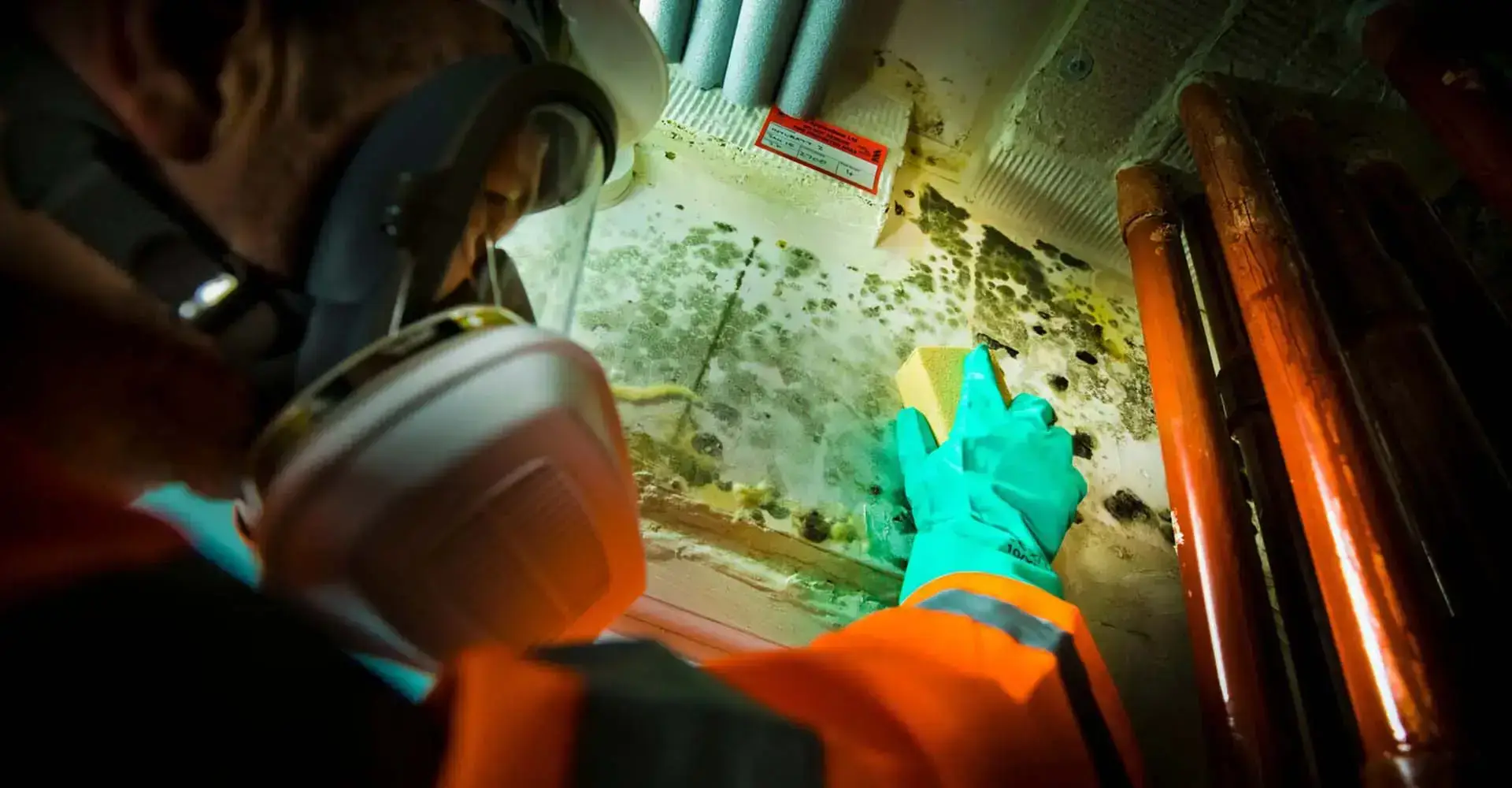
Why does experience make the biggest difference?
We’ve worked on thousands of properties across the UK, from listed buildings to large commercial complexes, and the same lesson applies: experience matters.
In East Sussex, a landlord managing a six-bedroom HMO property contacted us about persistent mould issues in three ground-floor bedrooms. Despite the property being fully refurbished, black mould growth was affecting the ensuite bedrooms, posing risks to tenant health. Once the moisture source was fixed and the area professionally remediated, the mould never came back. Read the full mould remediation case study.
That’s the difference between cleaning and true remediation, one treats symptoms, the other cures the cause.
What is the risks of DIY mould cleaning?
DIY mould solutions can make things worse. Scrubbing or spraying mould without proper containment releases spores into the air, spreading them to other areas of the property.
Professional teams, on the other hand, use:
- Negative air pressure systems to stop airborne spread
- Industrial HEPA filters to capture spores
- Specialist PPE and biocides for safe, thorough cleaning
Without this level of control, DIY attempts often lead to mould spreading and not disappearing.
What are the health impacts of mould exposure?
Mould exposure can cause coughing, wheezing, sinus issues, and even fatigue. For vulnerable people, children, the elderly, or those with asthma, mould can be a serious health risk.
Awaab’s Law itself was introduced because of these dangers. The government now classifies damp and mould as a category 1 hazard under UK housing law. This means it poses a severe risk to human health.
To understand the health risks of mould in more detail, read ‘UK Homeowners guide to mould identification, health risks & removal‘.
When should I call a professional?
You should contact a professional mould remediation specialist if:
- The mould covers more than 1m²
- The mould keeps returning despite cleaning
- You’ve experienced flooding or leaks
- You notice musty odours or staining
- Occupants are suffering from health symptoms
Under Awaab’s Law, landlords now have strict deadlines to act, but private homeowners should also take mould as a warning sign to prevent long-term damage.
Preventing mould after remediation
Remediation is step one. The next goal is prevention. Our technicians recommend:
- Keeping humidity below 60%
- Improving ventilation in bathrooms and kitchens
- Finding and fixing leaks and damp patches quickly
- Using dehumidifiers in problem areas
- Ensuring wet materials (like plaster or flooring) are dried promptly where possible
Simple steps can keep mould away for good, which saves you stress, cost, and health concerns.
Conclusion: Real safety comes from real expertise
Mould is persistent, but with stronger housing standards like Awaab’s Law, the UK is finally treating it as a health and safety issue, not just a cosmetic one.
At Ideal Response, we’ve spent more than 20 years helping property owners, landlords, and housing associations create safer, healthier environments. Our certified technicians combine advanced diagnostic tools, proven remediation techniques, and an understanding of UK housing regulations to deliver results that last.
We believe that tackling mould properly isn’t just about compliance, it’s about protecting the people who live and work inside those buildings. Contact us today and take the first step to a mould free property.
Don’t just remove mould, remediate it for good.
Need to speak to an expert urgently? Call 0800 088 4170
Professional mould remediation FAQs
What is professional mould remediation?
Professional mould remediation is the controlled process of identifying, containing, and safely removing mould contamination. It addresses the underlying causes, such as leaks or poor ventilation, and restores normal air quality to prevent future growth. It goes far beyond basic cleaning or surface mould removal.
How is professional mould remediation different from mould removal?
Mould removal cleans what you can see; mould remediation eliminates the root cause. Remediation includes moisture detection, containment, air filtration, and post-removal testing. It ensures the environment is safe and dry, making it a long-term solution rather than a temporary fix.
How long does professional mould remediation take in the UK?
Most small domestic projects can be completed within one to two days. Larger or commercial properties may take several days, especially if structural drying, verification testing, or multiple contaminated areas are involved.
How much does professional mould remediation cost in the UK?
Costs depend on the size of the affected area, type of property, and level of contamination. On average, small residential jobs start from around £400 – £900, while large or commercial projects can range from £1,000–£5,000+ depending on complexity and access.
What are the health risks of living with mould?
Mould exposure can cause coughing, wheezing, eye irritation, fatigue, and allergic reactions. For children, the elderly, or people with asthma, mould can aggravate breathing problems. Long-term exposure may also contribute to chronic respiratory conditions if left untreated.
What is Awaab’s Law and how does it affect landlords?
Awaab’s Law, part of the Social Housing (Regulation) Act 2023, requires landlords to investigate reports of damp or mould within 10 working days and start remediation within 5 working days. Emergency hazards must be addressed within 24 hours. It makes timely professional remediation a legal obligation in social housing.
Can I stay in my home during professional mould remediation?
In most cases, yes. Professional technicians isolate affected areas with containment barriers and HEPA filtration to maintain air quality. For extensive contamination, temporary relocation from specific rooms may be recommended for safety.
How can I prevent mould from returning after remediation?
Keep humidity below 60%, ventilate high-moisture areas, fix leaks quickly, and ensure proper insulation. Using extractor fans and dehumidifiers in bathrooms or kitchens helps prevent condensation – the most common cause of recurring mould growth.

Chris Hedges - Head of Marketing
With over 25 years' experience, Chris is adept at defining and driving strategy, while also enjoying hands-on operational delivery. He believes in an equal blend of creativity and analytical scrutiny, always finding inventive ways to achieve objectives, underpinned by evidence. Chris’s philosophies are simple: don't overcomplicate, always prioritise customer experience, and bend the rules just enough to cut through the noise and drive momentum and growth.